L'ample arxiu de Casa Planas i les seves col·leccions de postals, reculls de premsa, fotografies d'anuncis de publicitat, promoció turística o moda, llibres dedicats al Turisme i tota mena de materials que poden exemplificar els canvis socials sorgits a les Balears a partir de la irrupció del turisme de masses als anys seixanta, és el darrer objecte d'investigació d'Antoni Muntadas (Barcelona, 1942). Entre molts d’altres guardons i beques -com les de la John Simon Guggenheim Memorial Foundation, la Rockefeller Foundation, la National Endowment for the Arts del Council of the Arts de Nova York- i un gran nombre d’exposicions a museus i galeries arreu del món, sobresurten en la biografia de l’artista el Premi Nacional d’Arts Plàstiques 2005 i el Premi Velázquez d’Arts Plàstiques 2009, atorgats pel Ministeri de Cultura espanyol.
Aquesta nova recerca de Muntas s’incriu en el programa de residències d’artistes que la néta del fundador, Marina Planas (Barcelona, 1983), ha posat en marxa per tal que el ric fons i arxius de Casa Plabes doni lloc a projectes específics, com els que la pròpia Marina Planas ha presentat ja a Es Baluard. Primer fou la instal·lació d'un mural de postals inclosa dins l'exposició comissariada per Nekane Aramburu "Ciutat de Vacances", que abordava "el canvi històric, social i urbanístic" que s'ha produït a la capital balear entorn de les noves relacions amfitrió-visitant. Més recentment, Planas ha presentat el projecte expositiu "Enfocaments bèl·lics del turisme: tot inclòs", ja amb comissariat de l'actual directora d'Es Baluard, Imma Prieto, per mostrar "l'evolució del turisme i els conflictes que es deriven de la devastació dels territoris i de les transformacions culturals que afecten la vida dels habitants, accentuant la idea que relaciona cert tipus de turisme amb el empobriment i la destrucció".

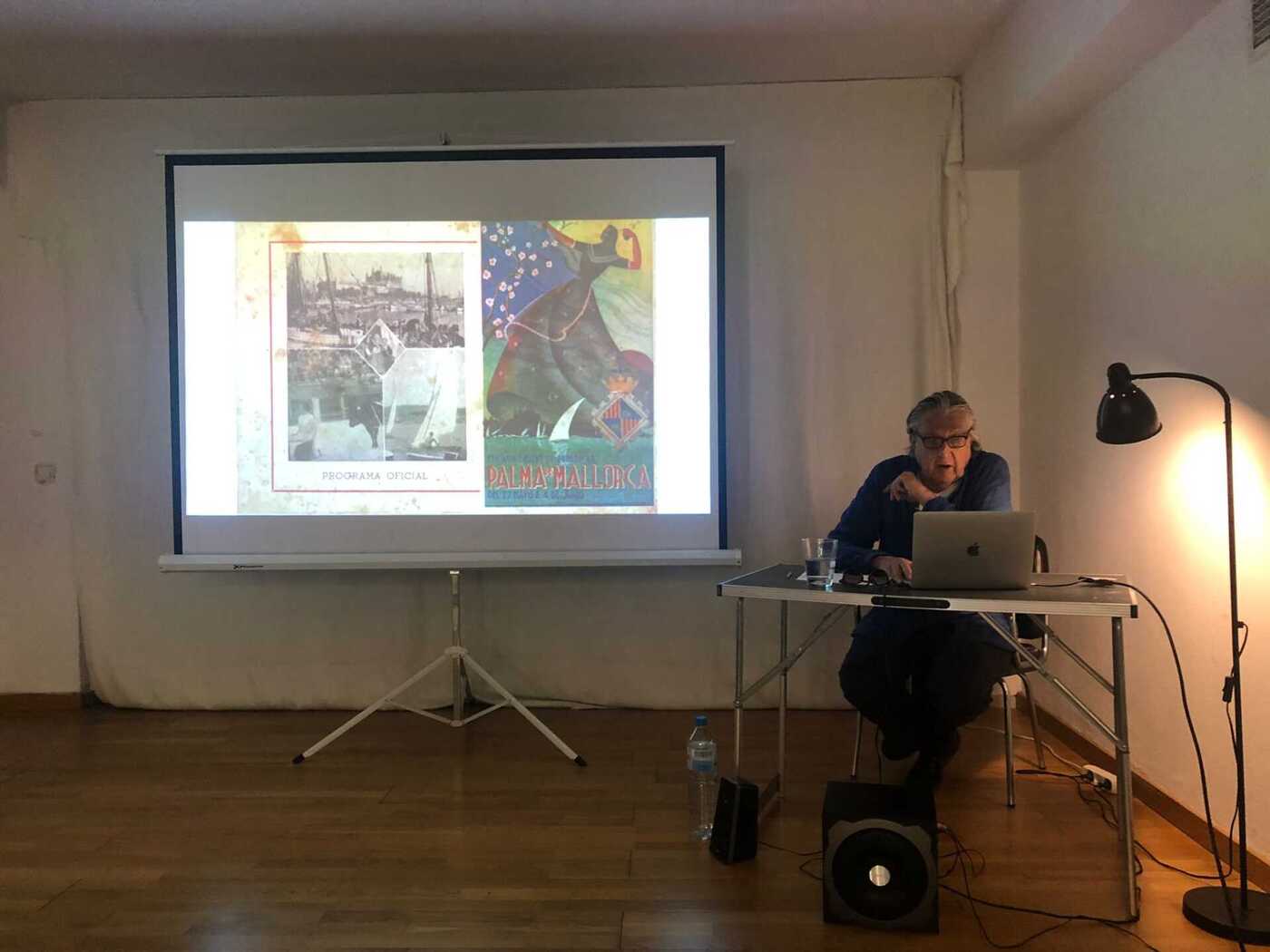
“Que venen les sueques. Anàlisi de la imatge turística”, fou títol de la Masterclass, que Muntadas considerà més bé un “brain storming compartit”, que forma part d’un projecte de més abast que analitzarà els mites i estereotips del turisme i els canvis socials produïts als territoris del llevant i les illes durant els anys cinquanta i seixanta, els que més interessen la mirada sempre inquisitiva de l’artista. És a dir, els anys de l’apoteosi del franquisme i els principis de la seva decadència, en part impulsada per l’obertura a l’arribada de visitants estrangers. De fet, l’Espanya, i més encara l’illa de Mallorca, d’aquells anys representen la pervivència de formes de vida i estereotips que l’industria del turisme va trasbalsar. Així, el mite dels camperols i les pageses vestides a la manera tradicional conviuen aquests anys amb la figura del “picador” i les imatges de les estrangeres “alliberades” que exhibien els seus bells cossos nòrdics a les platges mallorquines.


Conviuen en aquest repertori inicial que Muntadas va tenir la generositat de compartir amb el grup de persones que vàrem tenir el privilegi d’escoltar-lo, imatges de la pel·lícula de Berlanga “Bienvenido Mister Marshall” o la cançó de Manolo Escobar sobre “la minifaldilla”, anuncis del “Seguro de Sol” que s’oferia als turistes suecs i anglesos amb acudits de Cesc, portades d’”Hermano Lobo” i “La Codorniz” o anuncis de models internacionals com Susan Holmquist, fantàstiques troballes que exemplifiquen aquella coneguda proclama que deia “Spain is different and beautiful” que, en mans de Muntadas, ben segur que donarà resultats tan consistents com els que ens té acostumats aquest genial artista pioner del Media Art i de l’art conceptual i d’arxiu que tantes distincions i reconeixements ha rebut al llarg de la seva trajectòria. Com és habitual en tots els seus projectes, entre els que sobresurten la seva exposició “On translation” (2002-2003) i “Between the frames” (2011) al MACBA i “Entre, Between” (Reina Sofía, 2011-2012), Antoni Muntadas “planteja reflexions crítiques relacionades amb la configuració de la identitat i l’experiència contemporànies”. Per ell, “la cultura és traducció mitjançant la qual s'activen mecanismes que evidencien les ideologies subjacents en els processos comunicatius, ja siguin estètics, polítics, econòmics, emocionals, tecnològics o pròpiament lingüístics”.

Mantenint al llarg del temps aquest propòsit de "traduir" els codis culturals, l'artista invoca sempre l'influx de les paraules, de les imatges creades o trobades, de consignes i cartells publicitaris, així com d'instal·lacions escultòriques, vídeos, fotografies i objectes populars o "artefactes" que donen forma a cada nou projecte. Així, encara examina amb la mateixa energia que fa ja cinquanta anys -quan començà el seu camí amb el Grup de Treball català- les connexions entre els mass media i els mecanismes de control dels individus o les relacions i confrontacions entre el fet públic i el fet privat. I malgrat que ell declara repetidament que "es considera un outsider", Antoni Muntadas no dubta en endinsar-se en temes tan relliscosos com les similituds i les diferències, o els conflictes entre grups poblacionals històricament enfrontats, com el Japó, Corea del Sud i la Xina, que dóna lloc al seu projecte expositiu "Asian Protocols" que viatjà de Seul (2014) a Pequin (2018).

Més recentment, i oberta encara fins al 4 de setembre de 2022 al Centro Andaluz de Arte Contemporáneo, la seva exposició "Ejercicios sobre memorias pasadas y presentes", comissariada per María Teresa T. Herrera, "proposa -a partir del passat colonial d'Espanya a Filipines- una indagació sobre les identitats complexes que som tots, sobre els sistemes de construcció de subjectivitats i el món objectiu que aquestes conformen". Amb les diferents, i ben cuidades, escenografies en les quals apareixen el típic Mantó de Manila, les porcellanes o les monedes, l'artista reflecteix sobre les relacions comercials d'anada i tornada de Manila cap a Acapulco i com els objectes i espècimens que s'intercanviaven fruit d'aquelles polítiques colonials, representen no només l'entrecreuament cultural sinó també la violència o l'explotació dels recursos d'altri.
Amb aquests notables precedents i els recursos que el caracteritzen, no dubtem que duri el que duri la seva investigació dels continguts de l’Arxiu Casa Planas, Antoni Muntadas ens sorprendrà amb el resultat d’aquest procés “d’observació” que ell qualifica encara com “una feina a les planes”. Queda molt material en el qual aprofundir i recursos externs que poden determinar les directrius del projecte. Treballs de tesi sobre “les dones pageses”, “la literatura dels viatgers” o, entre d’altres “l’impacte de l’aviació i la mirada del visitant”, aspectes que li foren apuntats durant el torn de paraula dels participants en la seva compareixença a Casa Planas. No sabem tampoc quins objectes, imatges i elements de tot tipus podrà utilitzar l’artista en cas que aquesta investigació esdevingui un projecte expositiu, ni com o quan arribarà a la fi la seva tasca de recopilació d’informació. Tanmateix, segur que en aquest viatge al passat que Muntadas farà amb els vestigis d’un temps no tan remot, molts encara reconeixerem els nostres propis records.
Lluny queden, emperò, aquells anys cinquanta, seixanta i setanta en què tant les tecnologies com els recursos, els medis de comunicació i els discursos eren totalment diferents dels actuals. Aquells temps estan totalment superats i, al nivell de les influències, avui ja no vénen de la mà dels visitants estrangers o d’una publicitat esbiaixada, sinó de la informació que es produeix a escala mundial. Com digué Marc Augè, avui tots som “turistes planetaris” que visitem i descobrim el món mirant una pantalla.
ENGLISH TRANSLATION
ANTONI MUNTADAS: I AM AN OUTSIDER OF EVERYTHING
The extensive archive of Casa Planas and its collections of postcards, press cuttings, photographs of advertisements of merchandising, touristic promotion or fashion, books dedicated to tourism and all kinds of materials that may exemplify the social changes in the Balearic Islands from the irruption of the mass tourism in the sixties, are the last object of research of Antoni Muntadas (Barcelona, 1942). Among many other recognitions and grants -as those of the John Simon Guggenheim Memorial Foundation, the Rockefeller Foundation and the National Endowment for the Arts of the New York City Council of the Arts- and a great number of exhibitions at museums and galleries around the world, stand out in the artist’s biography the 2005 National Prize for Visual Arts and the 2009 Velázquez Prize for Visual Arts, awarded by the Spanish Ministry of Culture.
This new research by Muntadas on these collections is part of the artist’s residency in Casa Planas that the founder's granddaughter, Marina Planas (Barcelona, 1983), has launched, opening their archives to artists that wish to develop specific projects. Marina Planas, an artist too, has already exhibited twice at Es Baluard Museum with artworks made off their funds. The first one was the installation of a postcard mural included in the exhibition "City of Holidays" -curated by former director Nekane Aramburu- which addressed "the historical, social and urban change" that has taken place in Palma City around the new host-visitor relationships. More recently, Planas presented her project "Warfare approaches to tourism: all inclusive" -curated by the current director of Es Baluard Imma Prieto- to show the evolution of tourism and the conflicts that derive from the devastation of the territories and the cultural transformations affecting the lives of the inhabitants, accentuating the idea that relates certain type of tourism with impoverishment and destruction".
“The Swedes are coming. Analysis of the tourist image”, was the title of what Muntadas considered rather a “shared brain storming”, part of his process of research for a larger project that the always inquisitive gaze of the artist will analyze the myths and stereotypes of tourism and the social changes produced in the coastal territories and islands of Spain in the fifties and sixties. That is, the years of the apotheosis of the Franco regime and the beginnings of its decline, partly driven by the openness to the arrival of foreign visitors. In fact, the mainland of Spain and, even more, the island of Mallorca of those years represented the survival of ways of life and stereotypes that the tourism industry upset. Thus, the myth of the peasants and the women dressed in a traditional way coexist with the appearance of the “picador” (the women’s seductor) and the first images of the “liberated” foreigner girls exhibiting their beautiful Nordic bodies on the island beaches.
Among the amazing amalgam of photographs of the initial repertoire that Muntadas had the generosity to share with the privileged group that attended the encounter, there are such anachronistic images as those from Berlanga's film "Welcome Mister Marshall" or typical songs from Manolo Escobar about "the miniskirt”. We also saw photographs of the “Sun’s insurance” that was offered to Swedish and English tourists, together with jokes by Cesc, front covers of the ironical magazines “Hermano Lobo” and “La Codorniz” together with cozy advertisements showing international top models such as Susan Holmquist and that funny advertisements that promoted Spain saying: “Spain is different and beautiful”. All these and more where the fantastic findings that Muntadas selected to exemplify the materials that he’s collecting, materials that, in the hands of Muntadas, will surely give results as consistent as those that we are used to discover from that great pioneering artist of Media, Conceptual and Archival Art, that has been awarded with many distinctions and recognitions throughout his career.
As usual in all his projects, among which stand out his exhibition “On translation” (2002-2003) and “Between the frames” (2011) at the MACBA and “Entre, Between” (Reina Sofía, 2011-2012), Antoni Muntadas “raises critical reflections related to the configuration of contemporary identity and experience”. For him, "culture is translation through which mechanisms are activated that evidence the underlying ideologies in communicative processes, whether aesthetic, political, economic, emotional, technological or linguistic."
Maintaining over time this purpose of "translating" cultural codes, the artist always invokes the influence of words, images created or found, slogans and advertising posters, as well as sculptural installations, videos, photographs and popular objects or “artifacts” that shape each new project. Thus, he still examines with the same energy as fifty years ago -when he began his journey with the “Grup de Treball” Catalan- the connections between the mass media and the control mechanisms of individuals or the relations and confrontations between the public fact and the private fact. And although he repeatedly declares that he "considers himself an outsider," Antoni Muntadas does not hesitate to delve into issues as risky as similarities and differences, or conflicts between historically opposed population groups such as Japan, South Korea, and China, which gives rise to its “Asian Protocols” exhibition project that traveled from Seoul (2014) to Beijing (2018).
More recently, and still open until September 4, 2022 at the “Centro Andaluz de Arte Contemporáneo”, his exhibition "Exercises on past and present memories", curated by María Teresa T. Herrera. The project "proposes -going back to the colonial past of Spain in the Philippines - an inquiry into the complex identities we are all about, about the systems of construction of subjectivities and the objective world that they shape". With the different, and well-kept, scenery in which the typical Manila Shawl, porcelain or coins appear, the artist reflects on the trade relations back and forth from Manila to Acapulco and how the objects and specimens that were exchanged as a result of those colonial policies, that represent not only the cultural crossroads but also the violence or the exploitation of the other’s resources.
With these remarkable precedents and the resources that characterize Muntadas projects, we have no doubt that no matter how long his research on the contents of the Casa Planas Archive lasts, Antoni Muntadas will surprise us with the result of this “observation process” that he still describes as “work in process”. There is a lot of material left to delve into and external resources that can determine the project guidelines: thesis works on “peasant women”, “travelers' literature” or, among others, “the impact of aviation and the visitor's gaze”, aspects that were pointed out to him during the turn of the participants of the encounter at Casa Planas. We also do not know what objects, images and elements of all kinds the artist will use in the event that this research becomes an exhibition project, nor how or when his task of gathering information will come to an end. However, surely in this journey into the past that Muntadas plans to make with the vestiges of a not so far away times, many of us will still recognize our own memories.
Gone, however, are those fifties, sixties and seventies in which both technology and resources, the media and discourses were completely different from today. Those times are completely over and, at the level of influences, today they no longer come from the hand of foreign visitors or biased advertising, but from the information that is produced on a global scale. As Marc Auge said, today we are all “planetary tourists” who visit and discover the world by looking at a screen.