Podríem començar parlant de bellesa i d'aquella reflexió que feu Adorno respecte a com la imatge de la bellesa sorgeix quan perdem la por davant una naturalesa aclaparadora. Un pensament coincident amb el de Remo Bodei, que veia perillar l'emoció positiva de la bellesa quan el fet sublim ens mostra la nostra petitesa davant l'enormitat de l'univers. Rilke ho deia de manera semblant, afirmant que "el bell era el començament del terrible que encara podem suportar". I Eugeni Trias va omplir glorioses pàgines sobre aquest binomi en el qual el sinistre és sempre "condició límit de la bellesa". Afirmà també que la bellesa ha de tenir sempre una cara oculta, ombrívola, inhòspita.
Més recentment, Byung-Chul Han ha escrit que "el bell no és una imatge, és un escut". Un escut darrere el qual potser s'amaga el terrible, el sinistre, el sublim, el dolor i les ombres. Aquestes reflexions emmarquen la nostra aproximació a una artista l'obra de la qual exemplifica perfectament aquestes característiques que condicionen la percepció de la bellesa i que incentiven la curiositat per oferir la recompensa del descobriment, o desvetllament, de les claus amagades en les imatges.

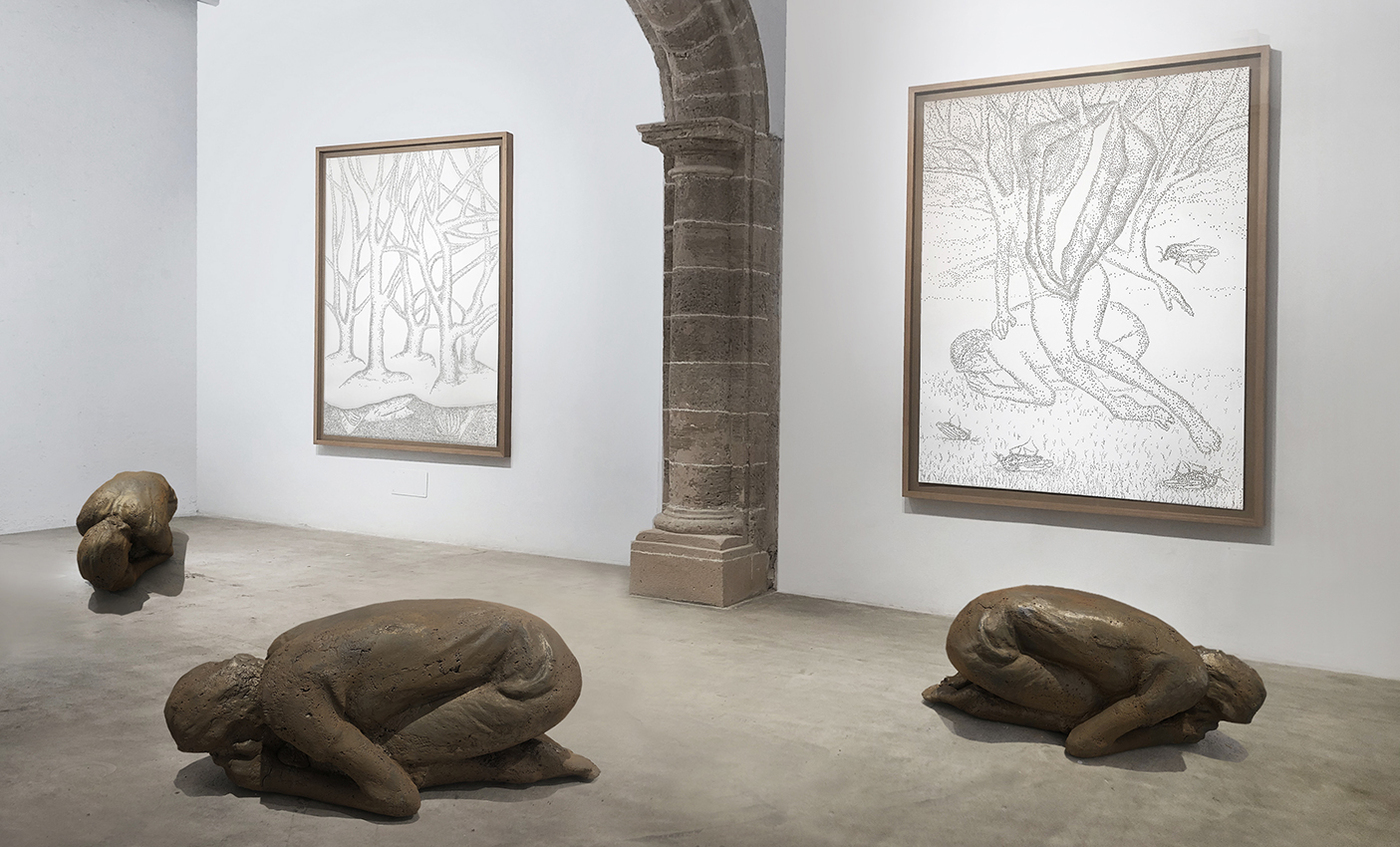
El primer impacte que ens proporciona la contemplació dels dibuixos damunt paper d'Amparo Sard (Son Servera, Mallorca, 1973) és d'admiració per la bellesa subtil de les seves formes perforades. Ben aviat descobrim que les composicions que l'artista ha creat amb aquesta pacient, minuciosa i un punt agressiva tasca que converteix l'obra en una mena de filigrana visual, amaguen situacions inquietants i la imatge d'una dona que es repeteix a quasi totes elles. Una dona que de vegades sembla adormida o feliç, que interactua amb insectes, arbres i objectes, que contempla la seva imatge duplicada o els seus membres deslligats del cos i que potser amaga les seves vertaderes emocions, com si el seu rostre fos aquesta "imatge escut" que la protegeix del que la turmenta o tem. I aquesta dona, alta, bella, poderosa, que viatja sense fi per tantes blanques superfícies d’aquests dibuixos es ella, Amparo Sard. És l’artista mateixa el personatge “fictici” que viu damunt aquestes delicades composicions una segona existència que li permet conjurar angoixes, experimentar amb les seves obsessions i, fins i tot, convertir-se en un ésser híbrid d’incerta natura.

Un clar indici dels interessos de l'artista ens la donava aquell autoretrat que s'alçà amb el Premi Ciutat de Palma Antoni Gelabert de Pintura el 1999, quan ella només tenia vint anys. Aquella imatge híbrida d'una dona amb quatre braços, inquietant i seductora, anunciava la visió pertorbadora de la condició femenina que oferiria el seu treball. El cos representat era una mena de cartografia d'emocions en el qual s'endevinaven ja els treballs de dibuix fet amb petites perforacions que esdevindrien una singular interpretació de l’àmbit del "dibuix expandit".
D'ençà els primers anys, sempre hi ha hagut al treball d'Amparo Sard quelcom d'arcà, una mena de màgia del cos que es projecta sobre la realitat com una ombra. Les seves imatges inventades constitueixen la reformulació d'una identitat que posseeix ara altres qualitats i que, superant la distància dels mil·lennis, ens recorden les representacions híbrides de l'antiga Mesopotàmia i als rituals indígenes en els quals les persones reals connecten amb l'esperit d'un animal. Podríem dir que Sard és una d'aquelles "dones que corren amb llops", títol del llibre de comptes amb el qual Clarissa Pinkola Estés convidava a les dones a explorar la seva part més instintiva. Prenguem com a exemple la commovedora escultura exposada a la Galeria Baró d'una dona replegada sobre el seu cos del qual broten branques d'arbre. Aquest personatge híbrid d'humanitat i natura que ara ens copsa amb el seu missatge metafòric i la seva poderosa presència podria ser la materialització de qualque dibuix de l’artista.

A fi de continuar la seva travessa cap a ella mateixa, Sard s'endinsa lliurement en un procés intuïtiu que es du a terme en un món imaginari, les experiències del qual després passaran pel filtre intel·lectual que consumarà la "des-realització" que dóna lloc a una obra. Un fet aquest, el de la des-realització del món, que només la pràctica artística fa possible i que té una característica específica en el cas de la performance -com recorda Jacinto Lageira- en la qual "l'acció no està totalment separada de la realitat viscuda". Precisament, una part important del quefer de Sard són les performances -registrades en vídeo o anònimes- en les quals “assaja” i “posa a prova” situacions que generaran imatges que prendran vida pròpia als seus dibuixos i viceversa. Imatges del seu cos inventat, com aquell que ocupa en la seva pràctica totalitat una gran vagina que li oculta -com un escut- el rostre, o aquell altre en el qual ella contempla el seu cap dins un tanc d’aigua enredat amb les branques d’un arbre.


Si bé la seva obra té un caràcter introspectiu i meditatiu, posseeix també una marcada vocació comunicativa. La seva reflexió sintonitza amb el nou context social que vivim, un temps de desconfiança i reclusió que, per Gilles Lipovetsky, implica una nova forma de relacionar-nos “amb les coses, amb el temps, amb un mateix i amb els altres”. És a dir, el discurs d’Amparo Sard proposa una visió de la condició femenina representada per les seves inquietuds, però té com a marc referencial aquest present incert que provoca l’aïllament i fredor emocional envers “els altres”. En canvi, la seva obra convida a explorar noves experiències i emocions, a veure no només amb els ulls, a deixar-nos guiar pel sentiment, o com digué Mario Perniola: “No patir, sinó fer-se sentir. És l’exhortació que ens arriba des-de la profunditat dels mil·lennis”. Un “sentir” que “per damunt de tot és un obrar sobre un mateix per sortir de la impassibilitat metafísica i del dualisme entre activitat i passivitat”.

Donades les seves característiques d’excepcional qualitat estètica i metafòrica, els dibuixos perforats d’Amparo Sard impulsaren el seu reconeixement internacional i foren inclosos en la Col·lecció de Dibuix del MOMA i d’altres museus internacionals. Però la travessa de l’artista per la creació contemporània abasta un molt més ampli ventall de pràctiques com -a més del dibuix a petita o gran escala i la performance- la fotografia, l’escultura, la instal·lació o l’art digital. Cal destacar que quasi be tot el desenvolupament del seu treball parteix de la tècnica de la perforació i del seu vocabulari iconogràfic, del qual ha anat extraient elements per donar-les la consistència de l’escultura, de vegades monumental i tan colpidora com aquell immens arbre que emergeix, amenaçant, del mur.

Fins i tot quan explora les possibilitats de l’art digital i l’ús d’aparells tecnològics sofisticats, Amparo Sard sorprèn amb noves composicions virtuals on està present la referència a la perforació, com succeeix en el seu auto-retrat “hàptic”, recentment presentat a ARCO per la Galeria Baró, una obra interactiva que permet als visitants disparar i fer forats al cap virtual de l’artista. També nous i sorprenents són les sèries de NFT’s de l’artista que mostren el seu crani en trossos flotant per l’espai ingràvid de la pantalla, creant infinites noves configuracions. Es curiós que pràctiques tan simples com la perforació o la duplicació i trosseig del cos que mostra Sard en les seves composicions de dibuix damunt paper, hagi estat un recurs tan fèrtil en mans de l’artista, que ja l‘ha incorporat al dominis intangibles de la virtualitat i la techno-ciència, on el “nostre” cos ja no és resultat d’un procés estètic de des-realització, sinó una creació artificial amb entitat pròpia. No se’ns escapen ni les noves possibilitats de desenvolupament artístic en aquest àmbit ni tampoc les interpretacions i reflexions que des-de la filosofia i l’estètica caldrà abordar.

Podem dir, així, que l'obra d'Amparo Sard cobreix un arc temporal invisible en el qual es troben la mà antiga que interpretava el món amb els recursos precaris de què disposava i la sofisticada tecnologia científica que transforma la realitat per donar-li una dimensió inèdita, obrint interrogants que no podem encara resoldre. La màgia del passat i l’aventura d’un futur on la ciència obre la possibilitat de viure realitats alternatives conviuen en l'obra d'Amparo Sard, exemplificant en la dualitat del real i el seu doble, oen la sinistra complementarietat del bé i el mal, les pròpies qualitats intrínseques dels éssers humans que ella ens ofereix “encriptades” sota l'escut innocent de la bellesa de la seva obra.
ENGLISH TRANSLATION
AMPARO SARD: BEAUTY AS A SHIELD
We may start talking about beauty and Adorno’s reflection about how the image of beauty emerges when we lose fear in face of an overwhelming nature. A thought coincident with that of Remo Bodei, who considerer that the positive emotion of looking at beauty could risk when the sublime shows us our insignificant position in front of the enormity of the Universe. We may start to talk about beauty and Adorno’s reflection about how the image of beauty emerges when we lose fear in face of an overwhelming nature. A thought coincident with that of Remo Bodei, who considerer that the positive emotion raised by beauty could be on risk when the sublime shows us our insignificant position in front of the enormity of the Universe. Rilke similarly said that “beauty is the beginning of terrible that we can still stand”. Eugenio Trías filled in glorious pages his reflections about this binomial where the sinister is always “a limit condition of beauty”. He also affirmed that beauty must always have a hidden, gloomy, inhospitable side. More recently, Byung-Chul Han wrote that “beauty is not an image, but a shield”. A shield that may hid the terrible, the sinister, the sublime, pain and the shadows. These reflections frame our approach to the work of an artist that perfectly exemplifies these characteristics that condition the perception of beauty and stimulate one’s curiosity to offer the reward of discovering, or unveiling, the secret codes of images.
The first impact that comes from contemplating the drawings on paper of Amparo Sard (Son Servera, Mallorca, 1973) is of admiration for the subtle beauty of her perforated forms. Soon we discover that the compositions created by the artist thanks to a patient, meticulous and a bit aggressive technique turns the work into a kind of visual filigree that hide disturbing situations where the image of a woman repeats. A woman that may seem sleepy or happy, interacting with insects, trees or objects, contemplating her own duplicated image or her members detached from her body, hiding her real emotions and making of her face that “shield image” that protects her of troubles and of what she fears. And this woman, tall, beautiful, powerful, that travels through the white surfaces of these drawings is the artist herself. Amparo Sard is the fictious character that lives a second invented existence on these fine compositions that allow her to conjure up anxieties, experiment with her obsessions and even become a hybrid being of an uncertain nature.
A clear sign of the artist’s interests already showed up from that self-portrait that won the City of Palma Award, Antoni Gelabert of Painting, in 1999, when she was only twenty. That hybrid image of a women with four arms was both disturbing and attractive and prefigured disturbing approach to women condition that her work would develop. The body represented in that painting was a kind of cartography of emotions that advanced the future perforated drawings that would constitute a singular interpretation of the “expanded drawing” field.
From there onwards, there has always been in Amparo Sard’s artworks something arcane, a kind of magic of the body that projects on reality its shadow. This invented image supposes the reformulation of an identity that now possesses other qualities that, overcoming the distance of millennia, would remember us to the hybrid representations of ancient Mesopotamia or to the indigenous rituals in which real people connect with the spirit of an animal. We may say that Sard is one of these “women that run with wolfs”, title of the tale’s book by Clarissa Pinkola Estés that invited women to explore their most instinctive side. Let’s take as an example the touching sculpture exhibited at Baró Gallery of a woman folded over her body where a range of tree branches are emerging of. This hybrid being of humanity and nature that touches us with its powerful presence and metaphorical message could easily be a character on one of the artist's drawings.
With the aim of continuing her journey to herself, Sard freely dives up in an intuitive process that happens in an imaginary world. Her experiences in this mental place will later pass the intellectual filter that will fulfil the “de-realization” that gives birth to a work. A fact, that of the “de-realization” of the world that only the art practice makes possible and that has specific characteristics in the case of performance -as remembers Jacinto Lageira- where “action is not totally detached from lived reality”. Precisely a great deal of the artist work are her performances -some recorded in video and other maybe anonymous- where she “rehears” and “tests” situations that will later be developed as compositions in her drawings and vice versa. Images of an invented body, as the one that is practically occupied by an enormous vagina that hides -as a shield- her face, or that other where she’s looking at her own head inside a water tank filled of tree branches.
While her work has an introspective and meditative character it also possesses a clear communicative vocation. Her reflection syntonises with the new social context that we experience, a time of distrust and reclusion that -according to Gilles Lipovetsky- implies a new way of relating “with things, with time, with one-self and the others”. In other words, Amparo Sard's reflection may be built around a vision of the female condition represented by her own concerns, but it has as a referential framework this uncertain present that causes isolation and an emotional coldness towards "others".
In turn, her work invites to explore new experiences and emotions, to see not only with one’s eyes but to let us be guided by emotion, or as Mario Perniola adviced: “Not to suffer, but to be felt. This is the exhortation that reaches us from the dephts of the millennia”. A “feeling” that “above all is a work on oneself to get out of metaphysical impassiveness and from the dualism between activity and passivity”.
Given its characteristics of exceptional quality of aesthetic aspects and metaphorical character, the perforated drawings by Amparo Sard boosted her international recognition, being soon included in the MOMA Collection of Drawing and other international museum collections. However, the journey of the artist through contemporary creation includes a great range of practices as -besides small or big drawings and performance- photography, sculpture, installation of the digital art.
We must outline that almost all the development of her work has as starting point the technique of perforation and her iconographic vocabulary, from which she has extracted elements that become sculptural, sometimes as monumental and impressive as the immense tree that emerges, menacingly, from a white wall. Even when she explores the possibilities of digital art and the use of technological sophisticated devices Amparo Sard take as a reference the technique of perforation, surprising us with new virtual compositions, such as her “haptic” self-portrait, recently introduced in ARCO with Baró Gallery, an interactive artwork that allows visitors to shot their own holes on the artist virtual head. Also new and amazing her series of NFT’s show her crane in pieces floating through the weightless space of the screen creating infinite compositions.
It is curious that a practices as simple as perforating or duplicating and breaking the body in pieces, as Amparo Sard does in her drawings, have been such fertile resources in the artist’s hands, so much that she has even take it to the intangible domines of virtuality and techno-science, where “our” body is no longer the result of an aesthetic process of de-realization, but a real virtual creation. We can’t ignore the new possibilities of artistic development that offers this new ambit, neither the interpretations and reflections that philosophy and the aesthetics theory will need to address.
Thus, we may say that Amparo Sard work covers an invisible temporal arch in which meet together the ancient hand that interpreted the world with the precarious matters available and the sophisticated scientific technology that transforms reality to give it unprecedent dimensions, which we can’t still know where will take us to. The magic of the past and the adventure of a future where science can offer us the possibility of living alternative realities is what Amparo Sard's work seems to propose us, exemplifying in the duality of the real and its double, or the sinister complementarity of good and evil, the intrinsic qualities of human beings that she offers us "encrypted" under the innocent shield of the beauty of her work.