Probablement, una de les frases més conegudes i citades tant en l’àmbit artístic com al de la cultura en general sigui aquella del gran pintor Georges Braque (1882-1963) que diu: “L’art és una ferida feta llum”. I és cert que seguir el fil conductor que entén la creació com resposta al trauma, com a resistència i com a catarsi que esdevé cura, no només ens duria cap a un gran nombre d’artistes, sinó que ha estat invocat en no pocs projectes expositius. És aquesta una fèrtil genealogia que hauríem de lligar amb l’exploració de la intimitat i les proclames feministes, amb treballs que ens han permès indagar en les emocions primàries, en els debats interns i en aquelles ferides de l’ànima que només cura el temps i la voluntat.
“Que el teu dolor et curi”
Galería Xavier Fiol, Palma
Fins el 30 d’agost de 2022
I en aquesta nòmina hauria d’aparèixer Artemisia Gentileschi, que pintà com una venjança la decapitació d’Holofernes, en fer-la més semblant a una violació femenina (amb els braços del militar alçats com les cames d’una dona). També hi seria la gran exploradora de la identitat apocada de les dones de la seva generació que fou Louise Bourgeois, amb les seves interpretacions de la casa com un reducte opressiu, i Marina Abramovic, que feu de la seva ruptura amb Ulay un dels seus treballs artístics més potents o, entre d’altres, Tracy Emin, que construí amb el seu llit desendreçat la millor metàfora del buit que deixa el desamor. Malgrat les seves diferències, aquestes i altres obres de perfil semblant -i hi podríem afegirmoltes creacions literàries i poètiques- tenen en comú l’experiència del dolor. Del dolor que ens produeix la pèrdua i l’observació de la violència o la guerra (temàtiques a les quals Susan Sontag dedicà un assaig), el dolor del cos i el dolor metafísic que escindeix l’ésser, del dolor propi al dolor de l’altre... i tants petits i grans dolors, molts relacionats amb l’amor i la mort... Diu Byung-Chul Han que “el dolor sosté l’existència humana” que és “la seva força de gravetat”.
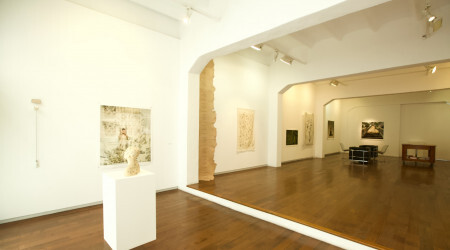
Dues artistes peruanes de diferents generacions comparteixen exposició a la Galeria Xavier Fiol, presentant obres recents que exploren la capacitat sanadora de l’art. Elles són Cecilia Paredes (Lima, 2950) i Mariú Palacios (Lima, 1976), protagonistes d’un intens i emotiu diàleg artístic basat en les seves pròpies experiències i inquietuds existencials. La imatge de conjunt dels seus treballs és molt bonica i consistent, en part donat l’impecable muntatge. Malgrat la diversitat dels temes i de les característiques de les seves obres, el resultat és ben notable i inspirà el text introductori de Fietta Jarque.

Paredes, ben coneguda en l’escena artística balear gràcies a les seves exposicions individuals a la Galeria Xavier Fiol, centra un cop més la seva mirada en aquesta natura vulnerable i preciosa que pateix la progressiva pèrdua dels seus espais tradicionals. Una de les principals línies de treball d’aquesta prestigiosa artista i professora convidada de la Universitat de Pennsilvània és precisament el vincle existent entre el poder de la naturalesa i la feminitat, una reflexió que explora en les seves famoses performances en les quals ella mateixa es transforma, camuflada entre flors i fruites o apareix com un animal amenaçat damunt un paisatge, en una expressiva simbiosi simbòlica que esdevé tota una proclama.
En aquesta ocasió, no s’inclouen imatges d’aquells famosos papers pintats que resultaven de les seves performances, però sí una magnífica fotografia basada en la imatge d’una Paredes híbrida de dona i arbust que s’ha transformat en receptacle i productora de les formes vegetals i florals que surten d’ella, replicant aquesta subtil sensació de misteriosa profunditat que solen tenir les seves obres. No menys impressionant, possiblement un emotiu tribut a aquella famosa defensora de la natura que fou Ana Mendieta, és la fotografia en la qual veiem com les cames de Paredes són part de les arrels d’un arbre, fantàstica metàfora que no necessita paraules.

Però no s’acaba aquí el repertori amb el qual Paredes ens tramet el seu convincent discurs d’elogi i defensa de la natura. Doncs no només és la natura salvatge d’un jardí, les singulars arrels d’un arbre o l’arbust floral que neix d’ella mateixa els motius que ha convocat aquí. També el món de les llavors i les espècies, així com els seus coneixements curatius ancestrals tanquen el cercle poètic-metafòric-literal que recorda que sense la naturalesa i el seu poder vital i la seva força curativa els éssers humans no podrem sobreviure en aquest planeta.
Una reflexió totalment diferent és la que ens proposen les obres de Mariú Palacios, a la que no coneixíem i que ens ha sorprès molt gratament, tant per la seva maduresa i sensibilitat en tractar temes difícils és aquella arqueologia familiar que tira els fils del passat i recupera històries perdudes que formulen interrogants sobre el nostre present, convertint-se en recursos per l'autoanàlisi i l'exploració del subconscient que permeten la cura de les ferides emocionals.
També mereixen reconeixement els mitjans utilitzats per escenificar aquestes qüestions, molt acurats i amb la contenció que demana la temàtica.
L’artista peruana, resident a Lima, ha invertit més de deu anys a investigar alguns avantpassats seus, com Enrique Palacios, heroi de la guerra de Xile, i Flora Tristán, una de les precursores del moviment feminista, escriptora i crítica observadora de la societat de la Lima del seu temps que denuncià la manca d’empatia dels limenys. Fou aquesta visió crítica de Tristán el que va facilitar vincle que l’artista pogué establir amb ella, perquè el costum de trivialitzar i criticar les vides alienes encara és viu a Lima.

Així a les dues fotografies de gran format incloses a la mostra, l’artista apareix embolicada amb un mantell antic brodat amb paraules pràcticament il·legibles, entre les quals hi ha frases classistes i texts poètics molt íntims d’ella mateixa. El mantell està retorçat com els intestins i fan referència al costum de criticar (“rajar”) durant els menjars socials a la capital peruana. Com em digué Palacios “el que un expulsa al parlar, sovint s’ho ha d’empassar”. L’artista reconeix que ha vist molt de prop aquest comportament que “repudio, però que estan en torn meu. “Estic fent -em digué- una mirada molt honesta, des de la meva pròpia idiosincràsia”.
Junt amb aquestes colpidores i belles imatges en blanc i negre en les que pràcticament sembla que el cos humà està sent “engolit”, s’exposen grans peces de cuir desplegades com a mapes gravats amb paraules i frases -algunes superposades entre si- moltes de les quals pertanyen al repertori poètic de Palacios i que evoquen el costum de tatuar-se la pell de les persones, una dolorosa pràctica que els permet dur al damunt les seves històries, emocions i vincles amb la realitat. Cal assenyalar que la major part de les poesies de l’artista tenen a veure, precisament, amb el procés de cura i amb la necessitat d’expulsar el dolor. És el que diu, per exemple, ella en aquest fragment poètic seu: “S’ha de tallar per curar! Cridà la meva intuïció”.

A més, d’una petita peça molt personal que ella descriu com “una màquina per a la supervivència de la pena” -en la que una cadeneta d’inodor surt d’una petita capsa que conté un os-, destaca dins el conjunt expositiu quatre collages d’imatges trobades, un conjunt que mostra per primer cop part del seu procés de treball, que sol tenir un caràcter més íntim. Són fotografies antigues que Palacios fracciona “a tall de bisturí”, com si volgués penetrar en els seus secrets. Són obres molt personals que l’artista defineix com “exercicis compulsius” que la condueixen fins al món dels somnis i aspectes psicoanalítics que està explorant, com per exemple l’erotisme, tema “troncal per la humanitat” al que dedicarà alguns dels seus propers collages inclosos a les seves properes exposicions a Lima i Ciutat de Mèxic.

Acabem aquest ràpid vol sobre les obres, compromeses i sinceres, d’ambdues artistes amb les paraules de Fietta Jarque al seu text de presentació de l’exposició: “Cecilia Paredes i Mariú Palacios s’embarquen en imatges que desfullen emocions abstractes mitjançant la figura i el desmuntatge del cos, per deixar flotant a l’aire aquells conflictes, transformats en una espècie d’aroma visual”.
ENGLISH TRANSLATION
MARIÚ PALACIOS - CECILIA PAREDES: THE GRAVITY FORCES OF PAIN
Probably one the most popular phrases about art and culture is that of the great painter Georges Braque (1882-1963) that says: “art is a wound made light”. It’s true that following the plot line that understands creation as an answer to trauma, resistance or catharsis that becomes a cure, not only will lead us to many artists but also to a number of exhibition projects. This is a fertile genealogy that links art with the exploration of intimacy or the feminist calls; with works that delve into primary emotions and intimate debates, with these wounded souls that only time may cure. And in this list should also appear the baroque painter Artemisia Gentileschi, who interpreted Holofernes decapitation as a revenge, with the pose of the General body similar to that of a woman when being raped (with his arms raised as the legs of a woman). Frida Khalo, who sublimating the pain of her body became a great artist. Louise Bourgeoise, whose reflections raised awareness about the oppressive domestic roles that diminish women freedom. Courageous photojournalist Margaret Bourke-White, who worked in war zones during World War II. Marina Abramovic, wo made of her painful broke-up with Ulay a memorable performance. Tracy Emin, who built a touching metaphor about the void after rupture with her undressed bed and room. All these, and many other artists, have in common the experience of pain, violence and war observation (themes analysed by Susan Sontag’s famous essay). The pain of the body, metaphysical sufferance, bearable pains and those that break you in pieces… many related by love and death. However, as Byung-Chul Han observed “pain holds human existence” being “its gravity force”.
Two Peruvian artists from different generations share exhibition at Xavier Fiol Gallery presenting recent works that explore the healing capacity of art. They are Cecilia Paredes (Lima, 1950) I Mariú Palacios (Lima, 1976), protagonists of and intense and moving artistic dialogue based on their own experiences and existential concerns. The global image of their works is beautiful and consistent, partly due to the impeccable installation of the show. Despite the diversity of themes and characteristics of everyone pieces, the result is notable and inspired the introductory text by Fietta Jarque.
Paredes is well known in Palma thanks to her previous individual exhibitions at Xavier Fiol space. Once again, she builts her proposal on that vulnerable and precious nature that suffers the progressive loose of its traditional spaces and roles. Precisely, the link between the power of nature and femineity is a persistent reflection to that prestigious artist and invited professor at Pennsylvania University, a recognized performer that transforms herself, camouflaged between flowers and fruits or as a menaced animal, as part of a naturalistic “mise en scène” that become suggestive photography artworks. Hers, in fact, is an expressive symbolic symbiose that acts as a convincing call to people.
Currently, however, the artist has not included these famous pieces of rich and colorful wall papers, but instead some other also naturalistic and very beautiful ones, again based on performances, such as that magnificent photography that show the transformation of Paredes as a recipient and producer of the vegetal and floral elements that are growing from her body. Not less impressive, possibly a touching tribute to that famous defender of nature that was Ana Mendieta, is the photograph where Paredes legs become part of the roots of a tree, a fantastic metaphor that need no words. As usual, the new artist artworks have that subtle, mysterious, atmosphere of deepness of all her creations.
There is still lot more to see. Paredes expands her convincing discourse in praise and defense of nature with remarkable pieces such as that where she climbs the staircase of a garden dressed with a magnificent embroidered dress, or those drawings and sculptures where she gives real persons names to seeds, spices, fruits, leaves or plants. These pieces remember us how much we depend on nature and on its healing powers and benefits, included our own existence and survival on Earth.
A totally different reflection is developed by Mariú Palacios, an artist that we have just discovered and whose maturity and sensitivity in dealing with the difficult issue that is family archaeology brings really good results. In fact, she delves into the past to recover lost stories that become her own tools in a process of self-exploration of the unconscientious that may help to cure emotional wounds. Moreover, it also deserves our recognition the means used to stage these concerns, as precise and restraint as the theme requires. The Peruvian artist, who lives in Lima, has spent more than ten years investigating the lives of some of her ancestors, such as Enrique Palacios, a hero of the Chilean war, and Flora Tristán, one of the forerunners of the feminist movement. A writer and acute critic of her time, she denounced the lack of empathy of Lima’s high society. In fact, it was that critical attitude of Tristán what allowed Palacios to create a bond with her, because that old habit to trivialize and criticize other’s lives still lasts in current Lima.
Thus, in the two large-format photographs included in the exhibition, the artist appears wrapped in an old mantle embroidered with practically illegible words, among which are classist phrases and very intimate poetic texts of herself. The mantle is as twisted as human intestines are, and refers to that common practice of criticize during social lunch and dinner. Palacios recognizes that she has seen this behavior from close. She said to me “I reject but that it is around me” and “I am doing -she adds- a very honest exercise, from my own idiosyncrasy”.
Along with these striking and beautiful black-and-white images in which the human body appears practically being "swallowed", large pieces of leather are displayed unfolded as maps engraved with words and phrases -some superimposed on each other. Many of those texts belong to the poetic repertoire of Palacios and evoke people’s tattooing of the skin, a painful practice that allow them to carry their histories, emotions and bonds with the reality. It should be noted that most of the artist’s poetry has to do precisely with the healing process and the need to expel pain. It’s what says, for example, this poetic fragment of her: “It has to be cut to heal! Called my intuition”.
In addition of a very personal little piece that Mariú Palacios describes as "a machine for the survival of grief" -in which a chain of toilets comes out of a small box containing a bone-, there are four collages of found images that show for the first time the artist’s working process, which is usually very intimate. The four collages are made of old photographs that Palacios splits “like a scalpel”, as if she wanted to penetrate its secrets. These are very personal works that the artist defines as "compulsive exercises" that take her to the world of dreams, psychoanalysis and other aspects that she is currently exploring, such as erotism, "core question for humanity" to which she will dedicate some of her new collages to be part of her coming exhibitions in Lima and México City.
We will finish this quick flight over the works, engaged and honest, of both artists with the words of Fietta Jarque in her presentation text: “Cecilia Paredes and Mariú Palacios embark on images that unleash abstract emotions through the figure and the disassembly of the body, to leave floating in the air those conflicts, transformed into a kind of visual aroma."